Did Not Finish

The start of something

Runners are like vegans: you know what they are within the first 10 seconds of meeting them because they will tell you. Guess which one I am (clue: not vegan).

See?

I tend not to talk about it here, or anywhere, because: a) talking about running is boring; and b) my whole schtick is failure, and I’m weirdly good at running. Obviously “good” is a nebulous term, but I can run five kilometres in between 21 and 22 minutes, depending on the wind and gravity.

What I am is “good” for somebody in their early 50s. I’m not a sprinter, but I’m decent at 5k and above. I’ve run a few 10k races, eight half-marathons, and one full marathon. I even came second in Parkrun once (Narin Beach, Donegal, 11 runners, it still counts).

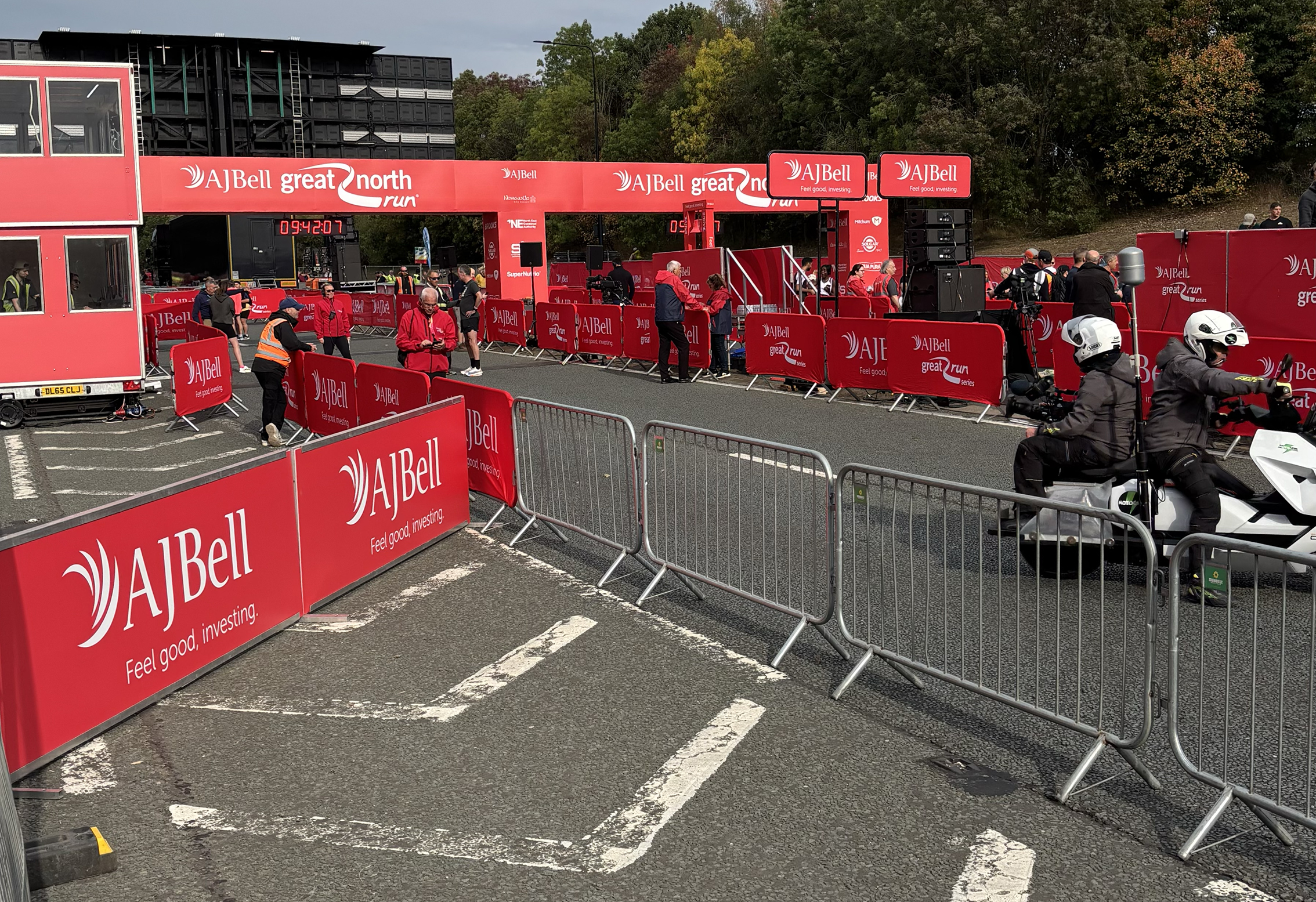
So why am I talking about running? I refer you to reason b) above. At the weekend, I took part in the Great North Run. In case you don’t care, the Great North Run is a half-marathon that goes from the heart of Newcastle, over the Tyne Bridge to Gateshead, and then on to South Shields. It’s the biggest half-marathon in the world, and, before Sunday, I had completed it three times.

I was very much looking forward to the race, and posted a number of Instagram updates, informing my many followers of my movements in excruciating detail. And then I bumbled up to the start line and was off.

During my training, I’d noticed that my speed had been increasing. This is a novelty to me, a man in his early 50s, who has become accustomed to everything else decreasing. Accordingly, when I started my race, I noticed after two kilometres (with 19 to go), that I was, not to put too fine a point on it, absolutely caning it, and feeling no ill effects.

“Keep going,” I told myself. “You can slow down later, and cruise to the end, thereby smashing your personal best.” This is how I speak to myself, in full sentences, giving me the respect I rarely receive from others.

And so I did. I did the one thing I should never do: listen to myself, an idiot. I was still going strong at four miles, though starting to flag a bit, when I ran past my adoring coterie of friends at their little cheering section. But I pushed on, deciding to slow down a little for the second third of my run.

By nine miles, I was feeling the strain. I’d chewed two dextrose tablets and taken on water, but it was a hot day. At ten miles I was noticing people overtaking me, but only vaguely. I couldn’t quite see properly.

At eleven and a half miles, I was aware something was wrong, and I moved to the side of the course, planning to stop for a minute, to gather myself and take a breath. It’s all a bit hazy after that. I remember stumbling, falling, and being unable to get up unaided. A group of very lovely spectators got me to a chair and gave me water, while alerting St John Ambulance volunteers nearby.

The St John people helped me into a wheelchair, and they started pushing me up to their treatment tent. “This is my ninth half-marathon,” I kept stating, in case they thought I was one of those celebrities who rocks up at these events with no training and comes a cropper. “I can run 5k in 21 minutes.”

I called my fiancée, who was waiting for me in the finishing section. “You’ll never guess where I am. No, not at the finish line. In a wheelchair.” I was feeling perkier than one might imagine.

And that is how I ended up, in a white tent, like the victim of a terrible murder, lying on my side, on a stretcher, in just my pants, socks, and trainers, with ice packs stuffed under my armpits, while one St John Ambulance volunteer squeezed a dextrose gel down my throat, and a kind-faced nurse attempted to shove a rectal thermometer into its intended holster.

“If you could just relax for a moment…” she suggested.

I appreciate that, to many of you, this is a powerfully erotic image, but I want to assure you that, in the moment, I was not, in any way, feeling relaxed.

Anyway, my reading was 39.7 degrees, a temperature best described by medical professionals as “toasty”, and my blood sugar was low, so I endured two more bouts of gel/rectal thermometer until the ice packs had done their work, and I was able to dress myself again, just as my fiancée arrived, having had to run two miles herself.

“This is standard,” she assured the wonderful St John Ambulance staff in attendance. I agreed, and I was discharged to walk the two or so miles to the baggage buses. I’m perfectly all right now – apart from the usual. But that is why, to anybody who was wondering, I did not post a picture of my sweaty and beaming face while I held a medal at the end of the race.

And that is why I’m going to have to do that bloody race again.

Like The Back Of My Head

The back of a man's head as he has his hair cut
Look at this flat-headed loser. Picture by Jonathan Cooper/Unsplash

I had the weirdest haircut I have ever had yesterday, and I can’t stop thinking about it. Just to clarify, it’s not the haircut itself that was weird. I look very much the same as I usually do following a haircut – as if my head has been placed in a pencil sharpener.

Technically it was the same haircut I have had for the past 20 or so years, ever since I realised that my bouffant look was making me appear as if I were auditioning for a touring Doctor Who stageshow in 1985. It was a Number Four, back and sides, and a trim on top. 

I can never remember if I want a tapered or square neck, so I just say yes to the first option given to me by whichever barber is doing the honours. I never really care, as I can’t see the back of my head. I don’t even think about the back of my head. I know it’s there, and I’m glad of that fact because I don’t want my brains to fall out if I’m startled or I take a sharp corner, but otherwise there’s not much I can do about it.

Anyway, what my haircut is not is a faff. Including chat from my usual barber, I usually go from the awkward unclarity of knowing if I’m allowed to sit down yet to ineffectually using the tissue provided to brush off the various clippings adhering to my face in an average time of six minutes.

Yesterday’s haircut took 47 minutes.

As usual, it was my own fault for trying something new. Last time I tried something new in the haircutting milieu, I had hot waxed cotton buds shoved into my nose and ears and their hairs ripped out, and my unusually sensitive scalp was assaulted with a spray that provoked such a dermatological reaction that one of my colleagues thought I’d been in a fist fight.

But I’m a busy man, with important things to do, and, when I saw that my usual barber was a man down, with six people waiting for their hair to be cut, I walked right past and on to my old barber’s shop. He had retired, and, sadly, recently died, but I knew he wouldn’t have sold his business to the sort of weirdo who would take 47 minutes to cut my hair.

I entered the shop and the barber motioned for me to sit down. Textbook. Then he covered me with the apron. It was really tight around the neck, uncomfortably so, but I decided to tough it out for six minutes. It was also really warm. Again, I could tough it out for six minutes.

He asked me what I wanted. I gave him the usual specs, and he set to work. After a fashion. He started with the clippers on my ears. Not around my ears, on my ears. Not, I would contend, even at my age, a priority area.

After my ears were shorn, he turned his attention to my back and sides, taking several passes over what I had previously assumed was a fairly normal-sized head, shaving maybe a quarter of a millimetre off each time. A couple of police cars drove past, and he launched into what I can only describe as a five-minute improv bit about how I were a master criminal, and that the police were probably after me. I tried my best to enter into the spirit of the impromptu play, but my heart wasn’t really in it. I could feel my body baking under the apron like a salt-crust fish, and I was regretting the colour of my T-shirt. How, I wondered, did my hair look exactly the same as it did when I sat in that seat?

“Look at this!” he told his young apprentice, a woman in her late teens/early 20s, who was scrolling on her phone and wishing away her life. “Have you seen the back of his head?”

“What?! What’s happened?!” I asked.

“Nothing, nothing, it’s just… I’ve never seen one like it.”

“What?!” Why was he making me have to think about the back of my head? That’s not why I visit the barber.

“It’s just. Well, 95% of white men’s heads are flat at the back. But yours… Yours is curved. It’s magnificent.”

“Oh,” I said. I don’t think anybody could have put it better. “I don’t usually see the back of my head.”

“You must!” he said. He grabbed a mirror and held it behind my head. I looked at the mirror. It was the back of my head.

“Look!” he implored his young apprentice, tearing her away from TikTok or whatever. “If you gave this white man a Number Two at the back, it would look like a Number Four. Just incredible.”

“Please tell me you’re not giving me a Number Two,” I begged.

“No, no,” he said. “But if I had, it would be all right.”

“I have to emphasise,” I replied, “that it really wouldn’t.”

I glanced at the clock. Somehow this process had been going on for 25 minutes. It was feeling less like a haircut and more like an abduction. 

He resumed cutting my hair, now reaching the top, with the tiniest, most delicate scissors I have ever seen. They were the sort of scissors that Tinkerbell would have owned. Again, he took atoms of hair from my head with each pass. It was like having a Reiki haircut. Rivulets of sweat were running down my sides and somehow into my trousers.

Eventually, after 47 minutes, my hair looked exactly as it had six weeks before I had embarked on this journey. He showed me the back of my head again, in case I’d forgotten what it looked like, I suppose, and whipped off the apron. The sweat patches on my ill-considered T-shirt formed a map of the world. I paid him and left the shop poorer, but much better informed about the magnificence of the back of my head. Although I couldn’t tell you if I have a tapered or square neck.

Why You Are Still Wrong To Like The Film Elf

Will Ferrell and a number of children in a scene from the film Elf

This weekend, it will have been 10 years since I published my most talked-about BLOGPOST, Why You Are Wrong To Like The Film Elf, and the reaction to this piece has taught me three valuable lessons.

The first lesson is that people who like the film Elf, really like the film Elf. This is not all people, admittedly, and very few of them are serious people. But when you tell somebody that you don’t like the film Elf, it doesn’t matter how many iron-clad arguments you have for why the film Elf is visual slop, indistinguishable from what would happen if you tasked one of those AI programs they have these days with making a “heartwarming Christmas-based comedy starring Will Ferrell”. They become outraged and purple-faced, in a way that is ironically at odds with the insipid philosophy expounded by the eponymous protagonist of the film Elf.

“How can you not like the film Elf,” they ask, spittle flecking my glasses? “What sort of joy-dodging, Scrooge-diddling scumbag are you?”

And, as I wipe away the phlegm and mince pie crumbs from my lenses, I reply, “The sort who can tell the difference between good things and bad things. Why are you so angry? I was given to understand you believe smiling to be – and I quote – your favorite.” I spell it that way because the film Elf is American, giving the film Elf far more respect than it pays to its viewers.

There is nothing I can do for these people. They are lost to logic. These are the sort of people who have made Ladbaby number one for the past few Christmases. The sort of people who thought Boris Johnson was “a laugh”. The sort of people who were disappointed by Captain Sir Tom Moore’s family, rather than amused.

The second lesson is that there are people out there who do not believe that somebody can be wrong to like the film Elf, not because they themselves consider the film Elf to be good, but because taste is subjective. They are easier to deal with than the lovers of the film Elf, partly because they are less likely to become violent.

Taste is subjective, but reality is objective. You can have a favourite colour or a favourite food, but you can’t really have a favourite mass murder. If you do have a favourite mass murder, you are wrong. And, in the same way, if you like the film Elf, which is objectively a bad film, you are wrong.

Now I am not equating mass murder with the film Elf, but also I sort of am. In one way, the film Elf is worse than mass murder because individual acts of mass murder are not repeatable owing to the fact that victims can only die once, while the film Elf is repeated every Christmas.

And the third lesson is that people who don’t understand hyperbole really, really like the film Elf.

I’ve Heard This One Before

A cup of tea with a biscuit

For some reason, I’m reminded of the old joke about a man who dies and goes to Hell.

The devil meets him at the gates, welcomes him, and gives him the old orientation spiel, his lanyard, etc. “We’ve had a bit of a rethink about how we organise things down here,” says Old Nick. To be fair, eternity probably does get a bit samey. You’d want to shake things up every so often.

“Oh,” says the man, non-committedly, probably still trying to get over the whole everlasting damnation thing and wishing he’d used earphones when watching videos on the bus.

“Yeah,” the devil replies. “Now you get to choose your punishment. Let me show you a few options.” And he takes the man to a door, which he opens.

Behind the door are thousands of unfortunates, all being whipped by one demon, while another pours lemon juice into the wounds. “Er, no,” says the man.

The devil takes him to the next room. Thousands more unfortunates on the receiving end of red hot pokers. “Again, not really for me,” says the man.

In the next room are thousands more, all standing waist deep in sewage, but, crucially, they’re all drinking cups of tea. “On balance, I think I’ll have this one,” says the man.

He wades into the sewage and is handed a cup of tea. Just as he’s about to take a sip, a whistle blows, and the head demon says, “Right, lads, tea break’s over. Back on your heads.”

Right, lads. Tea break’s over. Back on our heads.

Istanbul (not Constantinople)

Not usually considered a weapon

It was time to get my traditional pre-Christmas haircut. The older I get, the quicker it seems to grow, and not always from areas where I am used to having hair growing.

My usual barber is three days away from retirement. In an American movie, that would only mean heartache, but, honestly, how dangerous can cutting hair be? Still, one last go-around seemed appropriate, so I wandered down to her shop for its 9am opening time, an hour before my shift was due to start.

It seems that when you’re three days from retiring from your own gentlemen’s hair reduction business, you’re less concerned about arriving on time. Ten minutes after the shop was due to open, it still had not, and my hair was still growing. I needed a barber, stat. I’ve got a large head, and I can’t have too much hair on it, or my Christmas dinner paper crown won’t fit.

I tried another nearby barber who was due to open at 9am. His shutters were also down. There must have been some sort of barbers’ Christmas party in Liverpool last night, where they swap gossip about men with nits.

The only other option was the Turkish barber down the road. I wasn’t sure about this. I’ve heard stories about singeing, and my earlobes are quite large, even taking into account the size of my enormous head, so if they caught light we could lose half of Allerton Road. On the other hand, I was at risk of looking ridiculous at Christmas dinner. Besides, I’d be the customer in this scenario. If the barber whipped out the flame thrower, I’d firmly, if squeakily, pass on the opportunity to have my ear hairs melted.

I sat in the chair, and told the barber what I wanted – “This, only shorter” – and he set to work. If you’ve never had a Turkish barber attack your head before, it’s less “snip, snip, snip” and more “extreme topiary with a chain saw”.

Before too long, he had shaved enough from my scalp, and I did have indeed “This, only shorter” on my head. Perhaps it was a little shorter than I would normally expect, but I’d rather get my money’s worth.

“Eyebrows? You want eyebrows?” he asked. If that’s not a loaded question, I don’t know what is. I’m not sure what eyebrows are for, other than to show how surprised I am, but I’d rather have them than not.

“Erm, do you mean you’ll trim my eyebrows?” He nodded and I agreed. My eyebrows, after 40-odd years of stasis, mysteriously decided to enter a hippy phase a while back, and I have to keep on top of them. He shaved a millimetre or two off them.

“I like this,” I told my reflection. “This is a good look for you. You look suave, Gary.”

And then the barber asked me, “You want wax?” Did I?! I routinely have gel on my hair, otherwise it sticks up so much that I look as if I’ve been startled by a ghost in a cartoon. Every barber I have had in the past 35 years has asked me if I want wax on my hair, and I always reply in the affirmative. This was the finishing touch. “Yes, please,” I said.

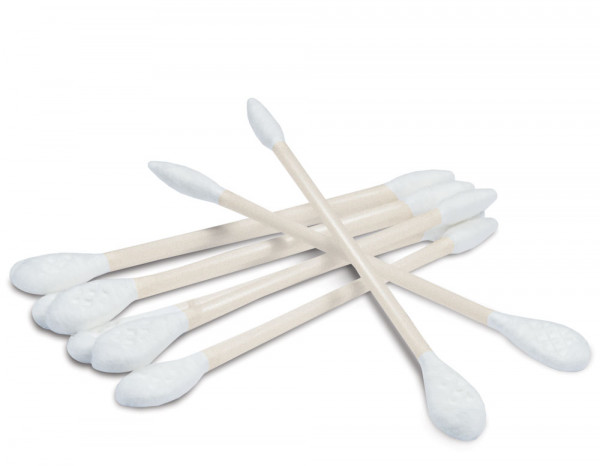
It will forever be a mystery to me how I failed to notice the bubbling vat of pink liquid on the barber’s shelf. It was right in front of me. And yet I don’t think I clocked it properly until the barber dipped two cotton buds in the cauldron, and then shoved the boiling wax UP MY NOSE.

And then, as I sat in the barber’s chair, the wax hardening on the cotton buds stuffed up my nostrils, he started painting my ears with hot pink wax. I had cotton buds in my nose and one hanging from each magenta-painted ear. I did not look suave.

“Ready?” he asked. I was and I was not. I nodded, the cotton buds swinging.

As he pulled them, along with a couple of dozen nasal hairs, out of my nostrils I made a speedy calculation: “Just how loudly can I yelp without lowering myself in the sight of the other men in this shop?” I settled on a strangulated sound which I can only describe as Mike Yarwood saying “Errr” in the voice of the future King Charles III.

As a tear trickled down my manly cheek, he stripped the wax from one ear. It felt like I had placed my ear against a frozen pipe, then ripped it away. It felt worse the second time.

I’ve never considered cotton buds to be threatening before. In fact, I used to scoff when the Gladiators used to fight each other with oversized Johnson & Johnson’s on Saturday-night telly. Now I see the error of my ways.

The Festive Bake Incident

A very quick illustration of a Greggs Festive Bake

The annoying thing about no longer having a weekly syndicated column is that when terrible things happen to me I cannot monetise them. It was the only thing that made being me worthwhile.

For example, if the Festive Bake incident had happened to me three years ago, I would have been cock-a-hoop. “Excellent,” I would have thought. “Yes, this might be the very worst thing that could have happened to me at this point in my life, but at least I won’t spend three hours on Wednesday morning alternately looking at a blank screen, a 1pm deadline, and a heart monitor.”

But not everything has a monetary value. Sometimes it is important to tell your own story just to help you process what has happened to you. So this one is pro bono, though never pro-Bono.

Let me start my tale by stating from the off that I am very much not in favour of Covid-19. If anything, it is one of my least favourite coronaviruses. I will do anything I can to prevent the spread of Covid-19, including enduring a small and brief amount of pain on two or three occasions, and wearing a face mask in confined spaces.

If that makes me a hero, then so be it. I know I am special, and I refuse to judge those who feel themselves unable to make that sort of gruelling effort to protect their fellow citizens, whether they are too feeble, or they are philosophically in favour of the promotion of Covid-19.

And yet… How is it that we can synthesise vaccines to mitigate a life-threatening disease in a matter of months, but we cannot produce a face mask that doesn’t steam up my bloody glasses?

I currently have three choices when out and about in the world: 1) be able to see everything, but helpless to prevent any droplets issuing from my person; 2) be able to see nothing more than a metre and a half away from me, but be able to sneeze without causing a riot in Marks & Spencer; or 3) protect passers-by from my evil fluids, but see the world as through a shower screen. The first is glasses on, mask off, the second is glasses off, mask on, and the third is glasses on and mask on. There is no way I can see everything and protect the public at the same time. I have no idea how Spider-Man does it.

All this means that a trip to the shops involves a lot of switching between glasses and mask, with the redundant apparatus being shoved in whichever pocket is available, and if you think that is not an accident waiting to happen, then you have the risk assessment capability of an anti-vaxxer.

Speaking of which, I had just had my booster jab, and was in the two-hour gap between the jab and the time an item I had ordered online was due to be delivered to the shop from which I was to collect it. The internet has turned the whole world into a branch of Argos.

I had time to kill and a few bits of Christmas shopping to snatch, so I began a long chain of switching between glasses and mask, until, during a glasses phase, I saw a poster in Greggs’ window for the Festive Bake. The Festive Bake is, for me, a more powerful sign of the imminent coming of Christmas than door No.1 on the Advent calendar or the arrival of a new Covid variant.

If you have never had a Festive Bake, imagine a small pillow made of puff pastry, filled with white sauce, stuffing, cranberry sauce, and the smallest possible amount of chicken – probably – and bacon that could prevent the bake from being technically vegetarian. Yes, it sounds dreadful, but it is somehow not, and I look forward to my first bite every year.

I pulled on my mask, and burst into the shop. “GIVE ME THE BIGGEST FESTIVE BAKE YOU HAVE! MAKE MY CHRISTMAS HAPPEN NOW!” I yelled. I did not really. It would have been pointless. All Festive Bakes are exactly the same size, like Kit-Kats or AA batteries. “A Festive Bake, please,” I mumbled, through my mask.

“They’re not very warm,” the Greggswoman told me. As if I cared. I’ve worn a mask on the bus for the past 21 months; a lukewarm pasty is nothing to me.

I bought the bake, and a packet of mince pies – Greggs’ mince pies are the best, without qualification – and tore out of the shop. I pulled the mask from my face and bit into my inaugural Festive Bake. It was lukewarm. “At least I won’t have to worry about the steam misting up my glasses,” I thought.

“Hang on, where are my glasses?” I patted down my pockets. I checked all my pockets. I repeated the process three times. I found pockets I hadn’t used since plastic £5 notes were introduced. I found pockets I didn’t know I had. The glasses were in none of them.

Where was the last place I had them, I wondered? My face, obviously. They weren’t there.

And so I found myself wandering up and down a busy shopping street, miserably scanning the pavement for a pair of glasses without the aid of a pair of glasses, while absent-mindedly gnawing on a Festive Bake. I don’t remember a bite.

After half an hour I realised that I would never find them. A magpie must have taken them. Or maybe a human person? Who might have handed them to a shop assistant…? No, they couldn’t be…?

I re-entered Greggs. “I don’t suppose anybody has handed in a pair of glasses…?”

The Greggswoman handed me my glasses. “You left them on the counter. I tried to run after you, but I couldn’t pick you out.”

Of course she couldn’t. I was wearing a mask.

That Sort At Table 11

A panino, which is the singular of panini

I STUMBLED into a cafe at lunchtime. It was one of those establishments in which it becomes immediately obvious that the owners have bought their chairs in batches from ArtfullyMismatched.com and even the cruets have beards and tattoos.

There was a whiff of coffee in the air. Good coffee, too. Nobody in that place had ever had to break a golden foil seal with a spoon handle. I don’t drink coffee, of course. It’s just evil Bovril. But I like the smell.

But what I really like is tea, and I knew that the tea in this place would come in a brightly coloured teapot, with a small bottle of milk, and sugar in sachets, because nobody has yet worked out a cute way to serve sugar, and I would have to specify English breakfast tea or risk a rogue herbal.

The point is, I was at home. This is how cafes are now. I understand them and have even come to terms with them. I know there will be a panini press behind the counter, the cakes – one gluten-free option, one vegan – will come from “a place down the road” and will be under clear plastic cloches next to the till, and there will be coriander ruining the carrot soup.

“This’ll do,” I said to my companion, and my glasses immediately steamed up, owing to my mask. This is also how cafes are now.

“There aren’t any tables free,” she said. She was right. Social distancing was totally messing up my lunch. “We could wait. Or there’s a table outside,” she added.

“I’m not sitting on an English pavement in the middle of autumn unless I’ve been made homeless,” I said.

“You might be,” she replied.

We left the cafe. “There’ll be another one down the road,” I stated. And I was right. We walked straight into another one…

This one was not how cafes are now. It was how cafes were then. It was full of wipe-clean tablecloths and doilies. And pensioners. And these were not the cool sort they have nowadays, who don’t remember the sixties because they were there. These people were probably also pensioners when I was a child. I cannot remember the last time I went into any sort of eating place and lowered the customers’ average age.

I looked at the walls, which clearly hadn’t been decorated since they dropped the “Farm” from the title of Emmerdale, and thought, “Well, that takes me back”. I fiddled with the COVID scanner app, which informed me that I would be checked in at the establishment until midnight. I was sure this would not be the case.

“Told you we should have waited,” my companion taunted me, as we sat down. “I could be eating a courgette frittata by now.” “No,” I said. “It’ll be good,” I lied. “Retro.”

I had a look at what this place had to offer. There was one type of tea on the menu: “Tea”. But there was a section on the menu labelled “Paninis”. Look, I know and you know that “panini” is already plural, but these people were making an effort. Maybe there was a young chef, in his late fifties, who had come in with his fancy ways, trying to drag the cafe into 2004, and who was I to discourage him?

There was a chicken, mozzarella, and chorizo panini on offer. I applauded this young buck’s attempt to fuse together the cuisines of Italy, Spain, and, I don’t know, Kentucky? It sounded delicious, and, at the same time, the only thing on the menu I’d willingly choose.

The young waitress came over to take our order. My companion went recklessly off-menu “Instead of a cheese toastie, can I have a cheese, tomato, and onion toastie, please? And do you do decaf coffee? Well, can I have a flat white, but decaf?”

The waitress’s head must have been all of a whirl. But she was on safer ground with me. “Can I have a tea, please? And the chicken panini.” She acquiesced and scurried off.

“I thought you were having the chicken, mozzarella, and chorizo panini,” my companion said.

“I am.”

“You said ‘chicken’…”

“It’s literally the only chicken panini on the menu. I think I’ll be OK,” I scoffed, in anticipation of scoffing. Apart from anything else, a man with a lisp attempting to pronounce “chorizo” correctly is just asking for trouble.

The waitress came back with some sort of coffee, and tea in a metal flip-top knuckle-burning pot. Retro for a reason. I had already drunk one cup before the waitress eventually returned with our food.

“Your toastie looks nice,” I said, as I bit into my chicken panini. As soon as I did, I understood what had happened.

The waitress must have entered the kitchen and informed the chef, “We’ve got that sort at table 11. She wants, wait for this, tomato and onion on her cheese toastie.”

“But that’s not on the menu!” he would have spluttered.

“I know!”

“You’re going to have to nip down to the Co-op for an onion. We haven’t got many tomatoes either. Oh, dear, oh dear. Is that them over there? What about the other one, the weirdo in the steamed-up glasses?”

“Oh, that’s the other thing,” the waitress would have said. “He wants, get this, a chicken panini.”

“What, no mozzarella and chorizo?! Go and ask him.”

“I’m telling you, that’s what he said,” the waitress definitely would have replied. “A chicken panini, he said. He was very specific.”

“God bless us! Aren’t some people funny?”

And so I found myself gnawing on a sandwich that was so dry that, if the manufacturers of those silica gel packets were worried about them getting moist, they could have used my chicken panini.

And it was accompanied by some undressed salad leaves with no tomato – “It’s OK, just get an onion. I can use his tomato on her toastie” – and some crisps. These crisps boasted the only seasoning on the plate. It’s a sad day when the ready salted crisp garnish is your meal’s flavour bomb.

And there was no tea left in the tiny pot. My mouth looked like one of those plastic tea-towel holders.

“Get them to take it back and get another one,” my companion said, through a mouthful of delicious toastie.

“I can’t!” I said, trying to suck some moisture out of a lettuce leaf.

“Why not?” she asked, enjoying my tomato.

“What am I supposed to say? ‘Excuse me, waitress, remember I asked you for a chicken panini? Well, what you’ve brought me here is a chicken panini?’”

I paid the bill and left a tip – I am not a monster – and exited. We walked past the first cafe. It was empty.

The Culture War Cummings Can’t Win

An old ruin

THEY’RE going to try to “culture war” their way out of it, aren’t they?

One of the few good things to come out of Coronageddon is the truce between Leavers and Remainers. Existential threats tend to do that to a society. We’ve seen a solidarity in this country that few of us could have imagined six months ago. Although I suppose it’s possible Dominic Cummings will write a few lines about it later today and attach it to one of his old blog posts.

For example, we’ve all, Leavers and Remainers alike, sat on our sofas at 7.59pm, every Thursday evening, and thought, “Oh, God, do I really have to stand up and go on my front step and clap? Maybe I could get away with it this week. Oh, God, there go the fireworks…” before lumbering outside and clapping while frantically scanning the street, hoping to see the first person who stops so you can too.

We’ve all stood six feet apart in long queues outside Tesco, shuffling forward as it’s one-in-one-out, absolutely livid at the person who comes out carrying a single packet of barmcakes.

And we’ve all had to get to grips with a Houseparty caller suddenly appearing on our screens, before abandoning that app and shifting over to Zoom, which has twice the admin, but zero chance of somebody surprising us while we’re on the loo.

But it’s the queuing thing that’s key to this. Whenever people start talking about national characteristics, I glaze over in the same way that I do when they talk about how the star sign under which I was born dictates the sort of person I am. Well, we Capricorns are naturally sceptical.

Yet anybody who has been abroad for five minutes will realise that respect for queuing is ingrained in the British psyche. There’s nothing we hate more in this country than a queue-jumper.

We’re a country of people who don’t make fusses in restaurants and apologise to inanimate objects when we bump into them. Yet if you stand in a Post Office line at 12.28pm and watch somebody walk straight up to the counter because they’re in a rush, you’ll see them being duffed up immediately by a little old lady, while her friends surround them in a ring, slyly kicking the queue-jumper in the bollocks.

There’s an argument to be made that this characteristic is even more prevalent among Leavers. Leavers don’t like rules in this country being made somewhere else. They don’t like immigrants coming over here and getting preferential treatment, etc, etc. Whether you agree with them or not – and I don’t – they perceive it as unfair and not how we do things in this country.

What Dominic Cummings has done is of the same order as queue-jumping, except with queue-jumping you don’t usually risk spreading a deadly virus to a region of the country. So he was “in a rush” and had to “jump the queue”? So what? We all have places we need to be. But we were all told that we had to stand in that queue and put our lives on hold. Some of us watched loved ones die from a distance because we had to stand in that queue.

And what if he acted within the law? I’d love to see that tested in court, but even if he did, there’s no law which dictates that we have to queue in Post Offices either. There doesn’t have to be because we know that if everybody just walked up to the counter and demanded immediate attention there would be blood shed.

What he did was fundamentally unfair. I know we’ve all bent the rules a little. We’ve stood a bit too close to people. We’ve seen people in their gardens. We’ve been outside for a bit longer than the hour we were allocated at the time.

But we haven’t jumped in our car, with Covid-19 symptoms, and driven 260 miles to a far-flung part of the country, risking breakdown or an accident. And then, when we’ve got there, we haven’t jumped back in that car and driven 60 miles with a child in the back seat, just to test our eyesight.

Cummings has been caught with his hand in the biscuit tin, while wearing a beanie marked BISCUIT SNATCHER, and this absolute clown car of a government is trying to brazen it out, with its outriders suggesting that it’s all a Remainer plot to remove the man who brought us Brexit.

They’re using their only weapon, divide and rule, to protect a political adviser. And normally it would work.

But the only division that’s relevant in this society at the moment is not the division between Remainers and Leavers. It’s the division between the tiny minority of queue-jumpers and the rest of us.

And this scandal is showing up this Prime Minister and his cabinet as nothing more than a shower of queue-jumpers. And I don’t fancy their chances of winning a war against British culture.

The Big Staying In: Day One

A bee, drawn from memory

ONE of the advantages of a full lockdown situation is that human contact is very limited, especially if your partner is one of those key workers we have these days.

It is not so much that I prefer my own company, more that I am aware that a little of me goes a long way, and it’s probably better for all concerned if I am left to fend for myself.

Anyway, this morning, on Day One of the Big Staying In I put some breakfast dishes and such into the kitchen sink, then went for a shower, then put on a dressing gown, then topped up my existential anxiety with a quick scroll through Twitter, then found a YouTube video which explained in detail what was wrong with a film I didn’t like, then made a cup of tea, then drank it…

“Oh, yes,” I thought, as I went to deal with the used cup before I got fully dressed, “I must deal also with the previous dishes, about which I had forgotten.” And so I went to the kitchen sink…

One of the disadvantages of a full lockdown situation is that it is very difficult to pass the message on to the animal kingdom. And, disappointingly, I found that an uninvited bee the size of an M&S mini mince pie was having a lie down among the dirty dishes.

I am not good with bees, or any insects which carry stings on their person, which is sort of the point.

But I am also aware that, before the current situation, we were very concerned about the reduced number of bees buzzing about the place, and I did not want to be responsible for a further reduction.

What I needed to do was persuade the bee to go outside without testing my memory of whether you use vinegar or baking soda on a bee sting.

Reader, I said “shoo” to a bee. It worked about as well as you might have expected.

So I pulled up the blind, then watched the blind fall, then pulled up the blind again, then watched the blind fall again, then pulled up the blind again, this time with the cord at an almost imperceptibly different angle, and opened the window over the sink.

Then I used a small stream of water to guide the bee into what I’ll call the drain guard. I don’t know the real name of it, and neither do you, but it’s one of those removable things that you put over the plughole to stop largish objects from clogging up your drain.

But the bee was very close to the protruding centre of the drain guard, and, if I went to grasp the centre, my fingers would have been dangerously close to the bee’s bum. So I thought for a moment, and then grabbed some tongs from the drawer.

Then I picked up the drain guard and its insect passenger, with the tongs, using all the dexterity of an Operation player on a well-frequented bouncy castle, and pushed it through the window. “Get out, you furry bastard,” I yelled. I shook the drain guard, and the bee tumbled out onto the window ledge, and the drain guard tumbled out of the tongs and onto the patio.

“Gah!” I said, and headed towards the patio doors. I didn’t wish to go into the garden in my stockinged feet, and a pair of my girlfriend’s flip-flops were near the exit. Now, I am not a natural flip-flop wearer and would normally shun them, as I have enough difficulty keeping hold of things with my hands.

But I put them on. I wouldn’t say I slipped into them, as it’s quite difficult to wear flip-flops and socks at the same time. I felt awkward in my own company.

But I slid open the patio doors and stepped outside, safe in the knowledge that nobody would see me at the back of the house, with my bestockinged and flip-flopped feet and flip-flopping dressing gown.

I arrived at the fallen drain guard. In the time it had taken me to decide on flip-flops and then find the patio doors key and then to flip-flop to the scene of the impact, the bee had somehow flown back to the guard and was circling inside it.

I was incensed and, without regard to my own safety, I shook the guard, ejecting the bee. “BUGGER OFF, YOU ABSOLUTE SOD,” I cried.

“Morning,” said my girlfriend’s neighbour over the fence, self-isolating in his garden.

And this is just Day One. I don’t think this lockdown is stringent enough.

REVIEW: Röski, Liverpool

What we were eating in the 1980s

I went to Röski, and, when the waitress poured gravy into my sherry, I understood why the restaurant’s name contains a shocked-face emoji.

Röski is Liverpool’s latest attempt to bag a Michelin star. On the surface, there’s no reason why the city needs one – Manchester hasn’t got one and you can’t move for gourmet Yorkshire pudding joints and Thai burger places there – but, on the other hand, Manchester hasn’t got one.

So MasterChef: The Professionals winner Anton Piotrowski has installed himself inside the former and much-loved Puschka on Rodney Street, changing the warm interior into a sort of duck-egg minimalism, and switching on his “Behold! I am very clever” beam to attract the right sort of attention.

This is fair enough, he is very clever, and we’ll get to that, don’t you worry. But the reason Liverpool has failed to trouble the Michelin guide is not so much about food as it is about service. It’s the Scouse Waiter Problem.

The thing about service in a Liverpool restaurant is that it’s great. It’s really friendly. And that’s the trouble. Scouse waiting staff tend to treat you like you’re their friend. I’ve even been called “mate” a few times, despite my studiedly stand-offish demeanour. I mean, how dare they? How bloody dare they?

Basically, there’s an informality about the proceedings, bordering on laissez-faire, and if there’s one thing the Michelin inspectors are not hoping to encounter, it’s that.

Röski is very different. The front of house staff – led by Piotrowski’s partner, Rose – treat you like guests. They’re not going to ask you to be their Facebook friend. These are professionals. There’s warmth, obviously, but they know why we’re there and we know why they’re there. They noticed our table was wobbly about four seconds after we did, and scurried over with a wedge three seconds after that, which is showing off, quite frankly.

Why are we there? Well, it’s not for the playlist, which was a mix of Motown and Stax that Saturday night, familiar as a hug from an auntie. It’s the food. It’s always the food.

The normal menu is suspended on Fridays and Saturdays, replaced by a tasting menu, which begins with incomer Piotrowski’s tribute to a scouse chippy tea. A cheesy chip is triple-cooked and glazed with Lincolnshire Poacher, and dribbled with a Wagyu gravy. Served on a katsu curry sauce slick is a breadcrumbed Wagyu beef nugget. Wagyu beef features heavily on the menu. I can only assume Piotrowski made a mistake on the order and put an extra zero on the end. And then there’s a Bovril butter to be spread on sourdough from Baltic Bakehouse.

Oh, yes, the Wagyu gravy. Glasses of fino sherry are served “at room temperature” with the meal. “We’re going to pour some gravy into your sherry,” the waitress tells us. “You’re bloody not,” my head says. “OK,” my mouth says. A drop of gravy drops into the glass, and the waitress swirls it round, turning the perfectly good sherry into a sort of 50s milky coffee.

Fair enough, Piotrowski knows best. The gravy brings out that umami taste that makes a good sherry, and the sherry somehow boosts the beefiness of the gravy.

He’s built up enough trust now. Bring it on, we think. He does.

Next up are gin and tonic crab, a clean-tasting crab mayonnaise with cucumber and papaya, and, in a frothy burnt butter sauce, a scallop which could be eaten with a spoon.

Asparagus with salad cream, and langoustine with wasabi were well executed, but only memorable because I pinched a copy of the menu.

“What Came First?” gets us back on track. A riff on a chicken and mushroom pie, it’s a powerfully-flavoured chicken velouté , covering wild mushrooms, served in an egg shell, and accompanied by a pile of bay leaves covered in dry ice, which atomises the herb, turning it into a perfume.

The Wagyu beef returns, because of course it does, in the form of a tartare served with burger mayonnaise – imagine McDonald’s special sauce with a touch more poke – and sliced gherkins. He’s having a laugh, now, is Piotrowski, gold put to the use of paving stones, and still not losing its lustre. Along with the tartare is a hoi sin duck, crispy on the outside, and tenderly pink inside.

And then we come to the red cabbage bolognaise. It’s a pile of what looks like a bog-standard ragu, served on top of a stone, and dusted with some Parmigiano Reggiano. And it really does taste like mamma used to make, specifically my mamma.

But there is no meat. Somehow, Piotrowski makes red cabbage and tomato taste like beef. Wagyu beef, probably.

It is as brilliant as it is pointless. If you’re going to show off how good your meatless ragu is, it’s got to be the the best ragu I’ve ever had. Honestly, Anton, I could give you my mum’s recipe (“Ingredients: mince, jar of Dolmio…”) and save you hours in the kitchen.

A squab pigeon comes next, on a wild garlic sauce. It’s a rosy breast, and a beautifully rendered leg. There’s not much meat on the leg, obviously – you’ve seen pigeons – but there’s a Chinese proverb which says “The closer the bone, the sweeter the meat” and you can’t knock the Chinese. Not after the Huawei contract.

Puddings start with “1980s”, Red Leicester attached by a cocktail stick to compressed pineapple with a Red Leicester custard, and end with “pina colada”, a coconut cream with pineapple sorbet. In between is a bit of chocolate crème fraîche nonsense with shards of cep-flavoured caramel. It’s magical.

There’s a decent short wine flight, by the way, including a grapefruity Chenin Blanc from Devon, of all places. I think it was a Chenin Blanc, I wasn’t paying attention at that point. I was too busy making sure the waitress wasn’t going to pour gravy into my glass.

I don’t know if Röski is going to break Liverpool’s Michelin duck, but if it does I won’t be wearing a shocked face.

Röski, 16 Rodney Street, Liverpool, L1 2TE. 0151 708 8698. roskirestaurant.com. Open Tuesday-Saturday. Tasting menu only on Friday and Saturday. Tasting menu: £75. Short wine flight: £40. Premier wine flight: £65.