COLUMN: July 14, 2016

andy-murray-wimbledon-tennis_3741489

FOR reasons which need not concern you it became clear to me that I needed a coffee table. Perhaps previously I had subconsciously considered I did not need one because I do not drink coffee.

But I think I decided a coffee table is one of those things adult people have and it would signify that I am a grown-up.

As is traditional, I went to a place and bought a flat pack coffee table, which I then transported home on the bus. As is also traditional, I had forgotten just how heavy flat pack furniture can be.

I am not saying it was a struggle, but it was one of the few warm days we have had this summer, and so by the time I got it home I looked as if I had been pacified by one of Boris Johnson’s German water cannons before being chased by a wolf.

I placed the flat pack box on the floor and changed my clothes into something cooler – a T-shirt and shorts – reasoning that I could get away with that as nobody else could see me. There was no point having a shower; I would only have to do it again afterwards.

During the third set of the men’s finals at Wimbledon, I put together an entire coffee table. I am not saying my achievement was greater than Andy Murray’s, but I will not stop you from saying that.

Then, as I stood up, I grazed my knee on my brand new coffee table, the fact of its existence apparently escaping me two seconds after I had spent 45 minutes constructing it.

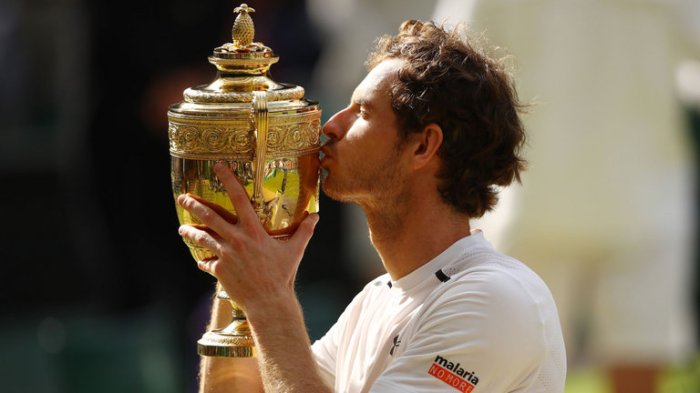
“Ow,” I said out loud, “My word, this is quite an annoying turn of events.” I am paraphrasing. As Andy Murray kissed his trophy on my television, I hopped around the room for a bit, saying “Ooyah!” and similar things.

I went to the bathroom cabinet in search of a sticking plaster. I only had one left, which was about the size of a drinks coaster. I sighed, stuck it on my knee, pulled on some vaguely appropriate shoes, and went out to buy more plasters so that I would be prepared for my next minor accident.

I was uncomfortable in my skin. I do not want you to think I am a sort of David Niven character, immaculately dressed at all times, and whose bow ties do not have clips, but I would not like to go to a job interview dressed as I was on that trip, in T-shirt, shorts, and sockless shoes. I did not want anybody to think I was an Australian.

It would be OK, I told myself, just a quick trip to the shop around the corner. I would be home in five minutes. Only about four people would see me.

But when I reached the sliding doors of Little Tesco I found my way blocked. They did not swish open, even when I did my special Obi Wan Kenobi hand movement. I knocked desperately. An assistant appeared. “Sorry, the doors are broken. We’re closed. You’ll have to go to the one up the road.”

So I trudged up the road, beginning the one-mile journey to the only other nearby shop which both sold plasters and was open at that time on a Sunday.

I could not tell you if everybody walking past me was silently judging me, only because silent judging is silent. But I could feel their eyes on me. They looked at me as I look at people who go to the shop in their pyjamas.

All I know is that the journey from my Little Tesco to the other Little Tesco a mile away felt like one of those anxiety dreams people have about going to work in the nude. I expect it did not help that my beige shorts were roughly the same colour as my beige legs, so that from a distance I looked naked from the waist down.

And then I arrived at the shop and saw my reflection. I looked at myself in my T-shirt and shorts and sockless shoes, a big plaster over my left knee, and I realised that I had left the house dressed as an eight-year-old boy.
By the time I got home I was fraught. I showered, made a cup of tea, flopped on the sofa, and put my tea on the lamp table next to it. It was closer to me than the coffee table.

COLUMN: July 7, 2016

The_Queen_Vic

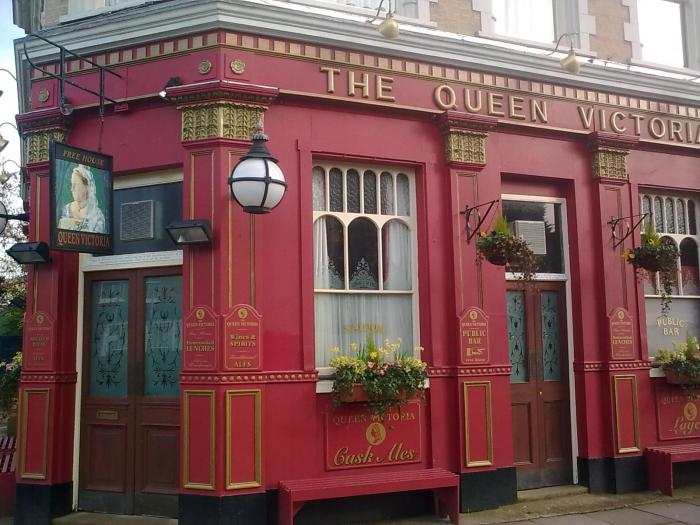
I WENT to the pub, an entirely rational decision based on the state of the country these days. I do not know if you have ever been to a pub, but it is a building full of men who drink ludicrous quantities of liquid and fail to wash their hands after going to the toilet.

Nevertheless, I thought a quiet pint would be in order. Perhaps I could read a book undisturbed. “Who’s that over there?” people might ask, indicating over their shoulders with their thumbs. “We call him The Professor,” the rosy-cheeked barmaid would say, “on account of his glasses and his book.”

I settled down at a table, put down my drink, and exhaled. I could hear the ticking of a clock that was not there. Yes, we might have recently chosen to break up the United Kingdom and plunge the country into recession just because we did not like people speaking foreign in Tesco, but the sun was shining outside, and it was quiet and cool in the pub.

I nodded at the two women sitting opposite, hoping it was enough to appear friendly while heading off any attempts at conversation. I am not a rude person but I was up to a good bit.

As I looked across at them I noticed something unusual about the bosom of the woman on the left. In it was nestling the tiniest dog I have ever seen.

It is hard to overstate how small this dog was. If dogs had pets and turned up with this dog on a lead, other dogs would laugh at how small their dog was. It would have to look up to address a sausage dog. I have seen more imposing hamsters.

I turned to my book and tried to put the size of this dog out of my mind, when one of the women addressed me. “We’re going out for a smoke, could you watch our shopping for us?”

I nodded, and they disappeared off to hasten their deaths along with Tiny The Smallest Dog In The World. Responsibility for their shopping weighed heavily on me. I closed my book and kept a watchful eye on the bags. Ah, well, I thought. At least it was quiet.

Five minutes later, the women had not returned. I started to worry that I had been pranked, or worse, that this was some sort of terrorist incident. Where were they?

Two men clattered in, accompanied by a normal-sized dog. It was starting to feel like Crufts. They pulled up chairs and switched on the television to watch the football, and began talking loudly and doing banter to each other. It was the logical extension of manspreading, that tendency of a certain type of man to sit with legs at ten to two on public transport, while people on either side are cramped.

The peace was shattered and so I continued to monitor the shopping bags. A third man joined the party carrying drinks and bringing some extra banter. They plonked one of them on the women’s table.

“Watch our shopping”, the women had said. That was my remit. I felt like a UN peacekeeper watching one country making an incursion on another, but with no direct orders to prevent it.

Why did they have to give me this level of responsibility, I thought? I only wanted a pint and a sit-down. I did not want to get involved in a demarcation dispute. I decided that if one more drink appeared on the women’s table I would step in.

The women returned. One of them shot me a look which clearly said, “You were supposed to be watching our table.” I shot one back which said, “Shopping, you clearly stated.”

The women explained to the men that it was their table and all five of them looked at me as if I had disappointed everybody. The new dog sniffed my crotch. I would have complained, but I had lost all moral authority. My nerves were jangling.

The dog then turned its attention to Tiny, regarding it as you or I would regard a jelly baby, an insubstantial but tasty snack appealing to our cannibalistic tendencies. It sniffed the tiny dog and licked its chops.

The stress was too great. I just wanted a pint, not to see a little dog gobbled up. I sank my drink and scarpered, preferring to take my chances in the chaos of Brexit Britain. It may be a dog-eat-dog world nowadays, but I don’t need to watch it.

COLUMN: June 30, 2016

job_bullman_roast_dinner

I HAD to have one of those meals out to discuss a professional matter that people have, and I thought I had better do it quickly before the banks ran out of money and you could still buy olive oil in this country.

When I arrived, my dining companion was already there. I was late, owing to a complicated sequence of events which started with a broken shoelace, took in a drunken man trapped in the door of a bus, and ended with me being caught up in some sort of parade or protest march. It is hard to tell the difference these days.

I sat down and apologised, and I began to explain, but we both decided after a while it was best that I stop.

The table, I noted, was quite wobbly. This did concern me. I well remember the Birmingham Event of 2012, in which I forgot about a wobbly table in a well-known chicken restaurant, right up to the moment I leant on it in order to stand up, and landed in a pool of peri-peri, thereby inventing the term “a cheeky Nando’s”.

The waiter appeared. He told me his name and that he was going to be serving us and I immediately forgot his name because I do not think anybody has ever remembered a waiter’s name.

This is because nobody ever uses a waiter’s name. It would make you sound either over-familiar, or like a toff in pre-war India summoning a servant.

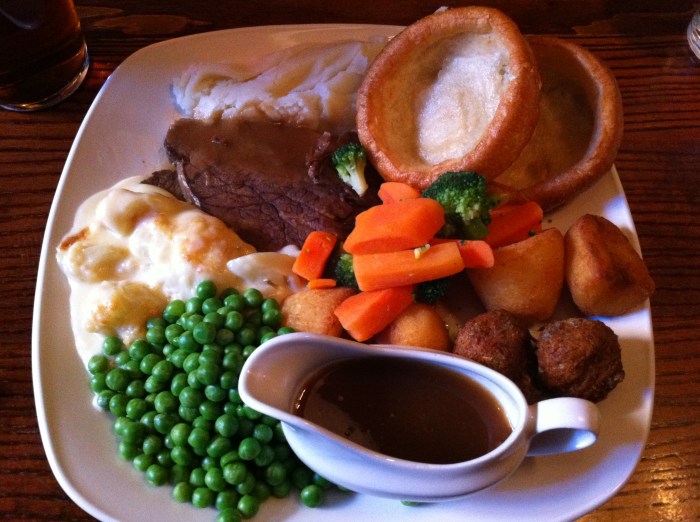
Anyway, I ordered roast beef and Yorkshire pudding and none of that foreign muck, thank you very much, because I know which way the wind is blowing, and my dining companion and I began to discuss professional matters of the highest national importance.

And when I was halfway down my glass – too early to ask for another, but not early enough that I would not be worried that I would run out during my meal – our waiter returned with the food. He placed it in front of me, and the reason I never order roast beef and Yorkshire pudding immediately became apparent.

There is no restaurant plate big enough to accommodate a catering-size Yorkshire pudding and all the other items one reasonably expects from a roast dinner. My table was going to look like the aftermath of a well-attended convention for peas.

I picked up my knife and set to work on the Yorkshire pudding. It was an excellent Yorkshire pudding, crisp on the outside, and meltingly soft on the inside.

But this meant it was a disaster, because it made cutting the thing virtually impossible. Too much pressure and the thing would explode, showering shards of super-hard shrapnel all over surrounding tables. Too little pressure and I might as well have had a knife made of cotton wool.

And even if I did exert the correct amount of pressure on the pudding – enough to break its super-strong shell without injuring fellow diners – it was far more than the wobbly table could bear.

The table shook, and I spilled some of my drink. Like lightning, I whipped the napkin off my lap and mopped it up. But now I had left myself at the mercy of accidental gravy. I sat with my legs at ten to two to split the risk.

“Are you OK?” my companion asked.

“Yes,” I said.

“It’s just that you’re sweating,” she said.

“I’m fine,” I said. “It’s just warm.” She nodded and buttoned up her cardigan, and I continued.

I picked up my knife again, and began to saw away gently at the batter carapace, back and forth, little grains of Yorkshire pudding sawdust collecting in the gravy. After a couple of minutes I had made a decent incision.

I looked up. My companion was staring at me again. “What on earth are you doing?”

“I’m having a Yorkshire pudding,” I explained. “It’s not going as well as I’d hoped.”

She sighed. “Turn it upside down. The gravy will have softened it. That will make it easier to cut.”

I did as I was told. She was right. I made short work of the centre of the pudding, and it was a breeze to cut through the rest. “Thank you,” I told my companion. “You have changed my life.”

And I was so delighted that I stood up to shake her hand, leaning with my other hand on the wobbly table.

You can probably fill in the rest yourself.

COLUMN: June 23, 2016

rabbit

BECAUSE of the mysterious ways newspapers work, I have to write this before the results of that Big Important Vote are announced, so hooray, if the side I like won, and booo, if the side I like lost.

But one of the most striking things that has come out of this ridiculous and divisive vote has been the revelation that a surprising number of people in this country believe that being good and being clever are bad things.

Imagine the state of mind you must have to consider “do-gooder” an insult. Perhaps you use it as an insult yourself. What does that say about you?

“Tut, there I was, minding my own business pulling the legs off live rabbits and scrawling, ‘I just don’t get this. Call this art? My five-year-old could do better if I had one’, on the wall of the Tate gallery. And then this namby-pamby do-gooder comes along and tells me off, because apparently it’s not ‘politically correct’ to set fire to public buildings. I want my country back from people who just want to make life better for other people.”

You’re right, of course. What sort of country wants do-gooders? In fact, let’s just abolish police forces and fire brigades and hospitals.

And while we’re at it, let’s make charities illegal. Who wants people going about the place raising money and protecting animals and keeping beautiful old buildings open and stopping abusive adults beating up their children? Do-gooders – they make me sick.

Because that is what it is about. When you feel the need to call somebody a “do-gooder”, it is because you know they are right but you want to do the thing that is wrong. And even if you do not agree, you are mocking the impulse to do good.

It is the same with mocking people for being intelligent. This is the only country in the world where it is possible to insult somebody for being “too clever by half”.

As a person who writes, mostly intentionally, humorous columns, I have found that the easiest group of people to mock is the stupid. I flatter myself that I am “punching down”, but I think we all know I am not.

But the reason it is easy to mock the stupid is that I do not receive letters of complaint from the stupid. To date I have never had an email which starts, “Dear Mr Bainbridge, as a member of the stupid community, I take exception to your assertion that there should be a special queue for us at Greggs…”

This is because nobody really thinks that they are stupid, in the same way that nobody believes they have no sense of humour.

But over the past couple of years, people have started to ally themselves with the stupid, so much so that the worst thing you can call somebody is an “expert”.

Even the Lord Chancellor and Secretary of State for Justice – a cabinet minister and former writer for The Times, no less – said during this awful campaign, which has divided families and generations, that people were “fed up with experts”.

I blame the media. Stories of national importance are routinely capped with vox pops, in which some unfortunate reporter has to stop people in the street and ask them their opinion on subjects they’ve barely considered. It makes the pronouncements of people who know a lot about a subject and people who do not appear equivalent.

Let’s make this clear. When you discount the views of experts in a subject in favour of what some bloke down at the pub thinks, when you don’t trust the judgement of somebody who has spent years studying a subject in detail and prefer the opinion of your mate Dave, who saw the first 10 seconds of a Facebook video on it once, then you are throwing in your lot with the stupid.

Apparently some experts are fine. People will happily go to the GP and show off their wart, because they know she has studied medicine, instead of trusting their mate Brian in the pub. Unless Brian is a GP.

But when it comes to constitutional politics or economics or climate change, experts are worthless.

That has to change. Whatever happens after this vote, over the next few years we’re going to need clever people more than ever.

Even if you think they’re just do-gooders.

COLUMN: June 16, 2016

Great-Pyramid-Of-Giza-Khufu-Cheops-Egypt-01

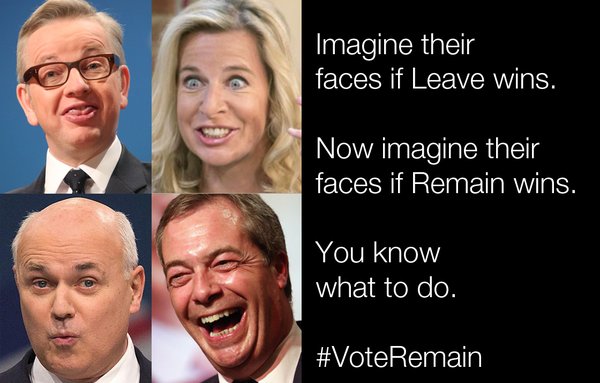
LAST week, while I was pleading with the Undecided not to chuck 75 years of progress down the toilet just so that Iain Duncan Smith can make you work a 14-hour day, I mentioned a terrible woman I had encountered in the supermarket.

Since then, my postbag – I have a postbag, shush – has been divided into three categories: people thanking me for writing last week’s column, people telling me I am an utter disgrace for writing last week’s column, and people saying, “Never mind about the biggest political decision we will ever make, to be made in an atmosphere of toxic misinformation, tell us about this terrible woman.”

Admittedly what happened was partly my fault. I had entered the mini supermarket in need of toothpaste and kitchen roll, and so I shunned the baskets at the entrance. I am lucky enough to have two decent hands, and I considered that even I could manage those two items without a basket.

Unfortunately I had forgotten that mini supermarkets are designed to take advantage of people like me, people who remember that they have run out of things only when they see replacements on the shelf, people who are pathologically incapable of writing shopping lists, and even if they did, would forget six things.

And so, as usual, as I passed through the shop I acquired items as efficiently as a Ronco lint remover picks up fluff from polyester jackets.

“I need a basket,” I thought, trying to see between the tin of cling peaches and French-style baguette the pile of stuff in my hands had placed in front of my face. But the baskets were situated conveniently at the entrance, and to reach them I would have had to go through the security scanner, and then, no doubt, explain myself in the interview room of a police station.

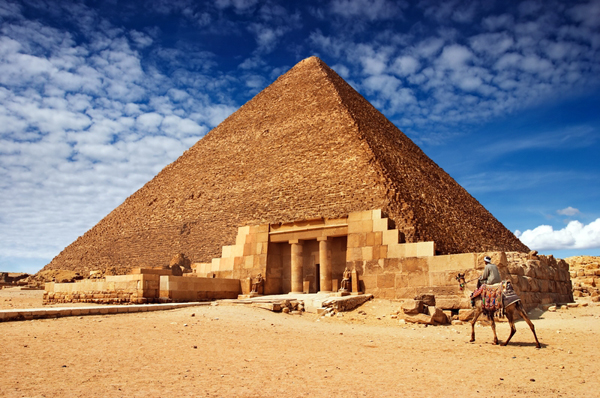
Slowly I manoeuvred the Great Pyramid of Gazza through the store, hoping that the washing-up liquid would not come free from its supporting position, making the largest man-made supermarket-based structure in history collapse.

I joined the queue. There were two people at the automated checkouts, and a line the length of an Olympic-standard swimming pool snaking its way to the manned tills. I chose poorly. I chose the automated checkouts.

Through the gap in my groceries, I could see on the right-hand checkout a woman with a lanyard dealing with a number of items. On the left was a young man who had done something extraordinary. He had gone into a supermarket and bought one thing.

Technically, I suppose it was six things – a six-pack of yogurt – but it would only have accounted for one item on a shopping list. I wondered, as I often do, why yogurts and variety packs of cereal never come in sevens.

The woman with the lanyard was experiencing some difficulty – mostly because she was buying booze at an automated checkout – but the light was flashing above her station, and she would soon have help.

The young man finished his transaction, scooped up his yogurt, and left. I was next in the queue. The Platform of Preparation awaited my ludicrous pile of unplanned groceries. I stepped forward…

And the woman with the lanyard, having decided that she had waited quite long enough, grabbed her prosecco and stepped sideways, thereby stealing my checkout.

I stopped abruptly, to avoid bumping into the ignorant monster. But my groceries did not. They tumbled out of my hands and onto the floor. A packet of crumpets hit the woman on her calf.

“Do you mind?” she huffed.

“Sorry, but I was next,” I pointed out.

“I was still being served,” she said.

I gathered up my groceries and stood up. But I could not use the other checkout because it was still awaiting the assistance of a human. Not only had she stolen my checkout, she had ruined her own.

I had to put my stuff down, so I dropped it on her first checkout. A shop assistant arrived. “Do you need help?” she asked.

“No, I…” I began.

“No, he doesn’t need help,” Lanyard Woman snapped. “I was here first. Deal with me.”
The assistant approved her booze purchase, and off swept the Rudest Woman I Have Encountered Since 2007, probably to select Leave on her postal vote.

And the next person in the queue took Lanyard Woman’s place, leaving me stuck at an inoperable checkout. The story of my life.

COLUMN: June 9, 2016

farage

OCCASIONALLY when I write these columns I push my nose into the political realm. This is generally when a week has gone by without minor incident, when somebody has failed to ask me for directions, or I have negotiated a revolving door successfully, or a member of front-of-house staff has smoothly guided me through the ordering process at Nando’s.

That is not the case this week. In fact, only yesterday I had an experience in a supermarket involving a malfunctioning automated check-out and the rudest woman I have encountered since 2007. This would definitely have made a column, and probably will.

But I have children, which means one day I will probably have grandchildren, and I want to be able to look them in the eye and tell them that, when the biggest political decision I will ever have to make came around, I tried my best.

I want to tell them that I tried my best to make sure that Britain did not cut itself off from the rest of the world and become an insular small-minded country which lost an empire and then could not find a new role because it didn’t like foreigners.

I want to tell them that I tried my best to stop right-wing zealots from abolishing all the employment rights my generation and the generation before me enjoyed: the maternity leave, the minimum paid leave, equal pay, anti-discrimination.

I want to tell them I tried my best to prevent the destruction of a union of independent nations, an imperfect union which, while it stood, prevented war in Europe.

That is a point that is surprisingly rarely made. The history of Europe is war, nations endlessly scrapping among themselves for land and money and power.

If you went back in time 200 years and told people living in Britain that not only would we not be at war with either France or Germany or Spain in 2016 but they would actually be our allies, they would be amazed. Then they would probably smash up your phone as the work of the devil and chuck you in an rat-infested lunatic asylum, proof that it was not always better in the Olden Days.

The idea that we would go to war with France or Germany now sounds apocalyptic. But the only reason it is unthinkable is that being in the European Union has made it so.

I understand that for some older people the idea of going back to the 1950s appeals. It was a golden age and you knew where you were. Dads went out to work, and they all had jobs. Mums looked after the house. Everybody had a house. You knew your neighbours. And, yes, there were no foreigners speaking languages you did not understand and cooking food you did not fancy.

But part of the reason the 1950s appeal is that you were young then, and it’s always better when you are young. And the 1950s were always going to look better because of what came before – rationing, bombs falling onto your neighbourhoods, a war in Europe.

That world is gone, and it is not fair for you to try to impose it on the young people of today, who would not recognise it, who have grown up in a world in which women get to choose when they have children, and whether they go to work, it is not fair to impose it on your grandchildren who have friends who are black or brown or gay, who ARE black or brown or gay.

It is not fair for you to impose an uncertain future on your grandchildren, a recession, years of wrangling for trade deals, in an attempt to bring back the past, especially if you will not be around in 15 years’ time to suffer the consequences.

I know there is no way this appeal will move those opposed to the EU on principle, who say Britain should stand alone, even though it needn’t. There is no way it will move the people who say, “I’m not racist, but…” who oppose immigration and think we should bring in “an Australian points-based system” even though Australia lets in more immigrants per head of population than us.

But if we vote Leave, and things do turn out badly, the EU will not let us back in. And if you really don’t know, then you have to vote Remain, because the country we live in now really isn’t that bad, despite that very rude woman in the supermarket.

COLUMN: June 2, 2016

johnny-cash

I DECIDED I needed to buy a new black shirt. Following the surprise destruction of my previous such garment, a reader had told me that black shirts are actually a style faux-pas, along the lines of double denim or yellow corduroys, but I pooh-poohed this person.

“How,” I asked, “are men supposed to know if they have dandruff if they do not own a black shirt? Answer me that.” And, of course, my interlocutor could not.

So I went in search of a black shirt and experienced some difficulty. Either there is no demand for black shirts, or there is currently a black shirt shortage. I suppose somebody must be buying them for Donald Trump rallies.

The first shop I entered had a plethora of shirts, in a variety of colours from white to not-white, and a disturbing number of Hawaiian and lumberjack patterns. I am neither Hawaiian nor a lumberjack, nor do I frequently come across either category of man on the 80A bus, so I can only assume this was some sort of inventory error.

However, the only black shirts I could find had short sleeves or were “slim fit”.

Firstly, I do not understand the existence of the short-sleeved shirt. I get T-shirts. They are designed for people who want to look casual and keep their forearms cool during warm weather. Nothing is worse than a warm forearm when the sun is out.

But what is the purpose of the formal short-sleeved shirt? Are there men out there who are happy to button up the front of a shirt but absolutely draw the line at rolling up their sleeves? Where are these men? Hawaii, presumably.

Secondly, slim fit shirts…? I am not a rotund man. Despite the fact we both wear glasses, I am never going to be mistaken for Eric Pickles, even by somebody in a hurry who has been given the vaguest description.

If I had to describe my body type it would be “slim, but not slim enough to wear a slim fit shirt”. I have tried, obviously, and I can just about get away with it as long as I am standing up.

But when I sit down, my 44 years gather for a conference around my waist, and the shirt finds it has a little more work to do than it had anticipated. Essentially, nobody needs to know what my belly button looks like, and it is my responsibility to ensure this does not happen.

What I need is a tailored fit shirt, something which does not billow in the wind, making me look like a flying squirrel, but also does not look as if it has been applied by a bored spray-on tan beautician who has accidentally filled up the tank with creosote.

And so, luckily, in the fourth shop I visited, I found the shirt of my dreams – not my actual dreams, of course. Given that my last nightmare starred a 2cm duck that turned out to be a transformed Captain Mark Phillips, former husband of the Princess Royal, you may assume that shirts are far too mundane to feature in my actual dreams.

It was black, it had long sleeves, it was tailored, and, crucially, it was £50 cheaper than its £70 price tag when it was first on sale. I cannot swear that I did not hear a choir of angels when I found it.

I was cock-a-hoop, readers, especially the reader who said I should not wear a black shirt. And then it all went wrong.

I handed over the shirt and the nice man behind the counter confirmed the price and asked me if I wanted a carrier bag.

Now, it’s clear why he was obliged to ask this, given that he has to charge for a bag if I want one. But how many times must he ask this question every day in order to hear the answer “No, thank you?” He works in a clothes shop. Who buys clothes and does not want a bag?

Who says, “No, thanks, I’ll just tie the sleeves around my waist?”

The answer is me. I said that. And then the nice man rang up my bill without a bag.

And then I had to explain that I was being sarcastic, and I really did want a bag. But it was too late. And I had to dig in my pocket for 5p to pay for a bag.

I hope you are satisfied, my black shirt-sceptic reader.

COLUMN: May 26, 2016

sign2

THE couple walked towards me, glowing with youthful love and springtime, their hands clasped as if they feared that if one let go the other would disappear into the mists. It was beautiful, inspiring, life-affirming, and it made me think.

“Ah,” it made me think, “This pavement is definitely not wide enough for people to be holding hands.”

But it was clear that the couple did not have my grasp of the laws of physics, or perhaps their expression of their love was more important to them than any concern that I might be splattered across the front of the oncoming bus. “Live by the bus, die by the bus,” they probably thought.

Either way, they refused to let go of each other and walk in single file for even a moment. Similarly, I refused to die an ironic death. There was no way I was stepping into the road.

We continued to walk towards each other. Suddenly our shared predicament filtered through the love-addled brains of the couple and they veered to their left while still holding hands, changing their angle and giving me a gap of roughly three-quarters of my width.

I could work with that. I flung myself through some closing train doors a couple of weeks ago, like a sort of commuting Indiana Jones. And I did this without being cut in two at the waist. This would be easy in comparison.

Unfortunately I had already committed myself to veering to my right in order to avoid them, and so we were still on a collision course.

To prevent an unseemly accident I changed direction, heading to my left. Inevitably, the couple had realised that a collision was imminent, and had switched to their right. Once again the crash was on. It was going down and there was not a damned thing we could do about it.

I suppose, in retrospect, we could all have just stopped walking and worked out how we were going to pass each other without being injured in one way or another, but in the heat of the moment such clarity evaded all three of us.

Unless… If the couple would actually let go of each other for five seconds I could pass between them. I put my faith in human nature and headed straight for them.

They did not unclasp their hands in time. Essentially I walked myself into a very low punch. Not for the first time.

I apologised in a high-pitched tone and they expressed some regret for their actions, and afterwards I gave some thought as to how such an incident could be avoided in future.

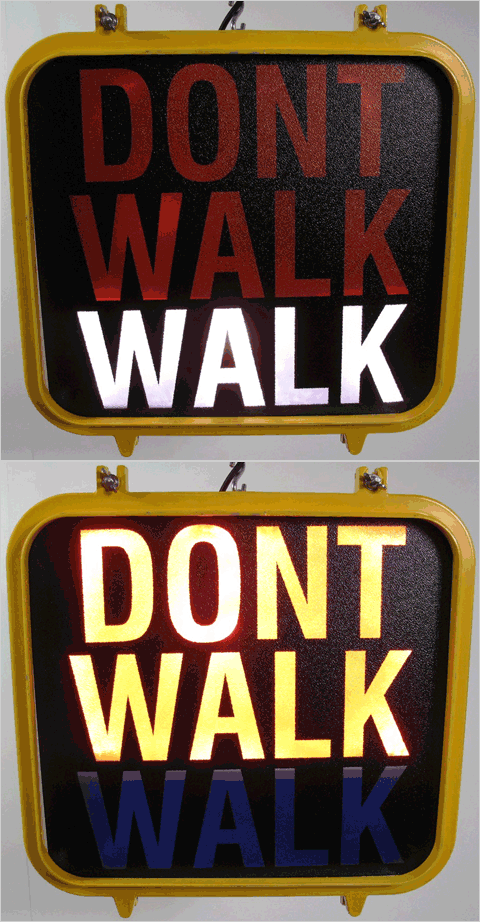
And I have decided that we need to have actual laws of the pavement, just as we have laws of the road.

I am not saying that we necessarily have to have traffic signals on the pavement, but it would not distress me unduly.

That said, I definitely see a case for brake lights on the sort of person who stops abruptly in front of me outside shops, causing scenes of impromptu intimacy best left to clubs in Ayia Napa and age-restricted websites.

Similarly, indicator lights for people who step out of shops and into swift-moving pedestrian traffic without checking if anybody is walking past would also be of some use.

Pavements themselves could be split down the middle to prevent collisions. Particularly wide pavements could become dual carriageways, with “dawdle lanes” on the outside, and “perfectly normal lanes” on the inside for people like me, who believe walking to be a method of getting from one place to another rather than a leisure activity.

But all of this would cost money, for white paint, for a start, and especially if pedestrian traffic laws are to be enforced. Which they should be.

So I suggest that, until my Glorious Pedestrian Revolution comes to pass, we make a decision right now.

And that is this. When there is a pending collision between people, whether on the pavement or in a corridor, without exception we veer to the left. If we make that the absolute rule we will never have to think about it.

Only by taking this sort of firm action can we ensure that the sole reason in future for me to be punched below the belt is that I deserve it.

COLUMN: May 19, 2016

I HAD an uncommonly good day this week. I finished something on which I have been working during my spare time for about a year.

And then, after I had done a little victory lap in my living room, practised my award-winner’s speech, and chosen my sun-bleached villa on the Amalfi coast, I got ready for a Big Quiz.

I am quite good at quizzes. When I was a child I was captain of my school quiz team, and we won actual competitions. Cambridge Bainbridge, they called me, loading me with a level of expectation I have spent the subsequent 34 years comprehensively shedding.

It turns out that my knowledge is wide, but also shallow. I know that the First World War was caused by the assassination of Archduke Ferdinand in Sarajevo, but I have no idea why. My intellect is like a crème brulee, a thin, brittle coating of wisdom and general facts concealing a vast, seething custard of self-sabotage and ignorance.

Anyway, this makes me prime fodder for people rounding up quiz teams. So it proved last week when my friend Alistair begged me on bended knee to join his group competing in a quiz night.

A couple of years ago, Alistair and some people from the office appeared on the TV show Eggheads. They were glorious failures. I am not saying that they would have won had they asked me to be among their number, but we will never be able to prove otherwise.

In any case, a couple of the massive Egghead losers were unable to attend this quiz night and so when Alistair was forced to ask me to make up the team I agreed. Among the things that make me so brilliant are my humility and my ability to set aside long-held and totally understandable grievances for the common good.

This is because I do like a pub quiz. I am an occasional member of a team which plays on a Thursday night – occasional because I usually work on a Thursday night – and so I feel I am among my people, people who cannot kick a ball in a straight line unless a curve is required but know that Albania borders on the Adriatic.

But there are three types of attendee who are always at a pub quiz. The first is the person who knows nothing beyond his or her own name and the name of Beyonce’s latest single.

This is always good because “What is the name of Beyonce’s latest single?” is invariably question number 29 and nobody else in the team knows the answer. They have always turned up at the quiz by accident, assuming it was an unusually quiet Zumba session.

The second type is Billy Second. Billy Second knows the answer to every question, but only suggests the answer after somebody else has started to write that answer down.

When it transpires that the answer is incorrect, Billy Second will explain that was his second thought, but everybody was so convinced the first answer was right that he didn’t say anything.

The third type is Mr Serious. It is always a man. Mr Serious spends his life scouring quiz books and is ready to pounce when the quiz master says “Zaire” instead of “the Democratic Republic of the Congo”.

Mr Serious has a gimlet eye on the pot of money next to the quiz master, and will be the first to congratulate the winner – on the rare occasion that it is not himself – with a handshake that means, “I wish you a painful and lingering death”.

They were all in attendance at the Big Pub Quiz, but somehow managed to cancel each other out, and our team broke through the centre and won.

We were handed a shiny cup and some prize money, and we wandered through the night streets singing a creditable if tipsy rendition of We Are The Champions, and I thought, for once, even though I had an early start the next day, that it was good to be a winner. It had truly been a great day. Life could not get any better.

And so it proved. I woke the next morning, disorientated, but not exactly hungover, and stumbled into work, a few minutes late for my 9am start.

The spoon of fate had crashed through my crème brulee, exposing my self-sabotage and ignorance to all the world. I had read the wrong week on my rota. I had arrived at work four and a half hours early.

COLUMN: May 12, 2016

choc_ice430x300

AVUNCULAR PRESENTER: This week on Things We Buy Even Though We Know They Will Go Wrong, we’re going to get the bottom line on choc ices. Why do we still buy them even though we know they will go wrong? Let’s go over to Kerry McKerry in Switzerland…

[A montage of cuckoo clocks, Roger Federer, piles of Nazi gold, and cheese with big holes in it. Intrepid reporter Kerry McKerry walks along a very clean street.]

KERRY McKERRY: This is Zurich, home of things which come from Zurich, in the same way that there is a sign at Wolverhampton train station saying “Welcome to Wolverhampton, Home of the University of Wolverhampton.” And home too to somebody who does not come from Zurich but who went to live there: Derek Wilton, the shadowy inventor of the choc ice.

[Kerry walks up some stone steps to a Swiss castle in the mountains. A hunch-backed retainer opens the creaking door, and Kerry steps inside. She sits in a library with Derek Wilton, who is in a wingback chair and mostly in shadow.]

KERRY McKERRY: Derek Wilton, I suppose my first question must be, “Do you get a lot of people pointing out that you have the same name as Mavis’s husband in Coronation Street?”

DEREK WILTON: No. I live in Switzerland, and he left the show in 1997, so it doesn’t come up that often. I think it’s just you and Les Dennis who’ve brought it up.

KERRY McKERRY: So, choc ices? What were you thinking?

DEREK WILTON: That is very simple. You see, before I invented the choc ice, I invented both the carpet which bears my name, and the carpet cleaner. Now, the carpet became very popular, but I could not sell a single bottle of the cleaner.

KERRY McKERRY: They’re very easy to clean, Wilton carpets, aren’t they?

DEREK WILTON: Exactly. I was a victim of my own success. But then I thought, “If I can somehow manage to get people to rub some sort of stain all over their carpets themselves they will beat a path to my doorway to get their hands on my carpet cleaner.”

[Wilton’s voice over a montage of scientists in a laboratory.]

DEREK WILTON: So I got onto the boffins in my lab. I asked them to think of something that people like, but which could cause serious damage to a light carpet. They came up with Marmite, but apparently not everybody likes Marmite, and Bovril, but vegetarians are less keen on beef tea. And then, suddenly, nice chocolate!

KERRY McKERRY: Everybody likes nice chocolate, apart from the Americans.

DEREK WILTON: Exactly, but how were we going to transfer chocolate efficiently from people’s mouths to their carpets? The answer was to use something else people like: ice cream.

KERRY McKERRY: I don’t understand.

DEREK WILTON: It’s so brilliantly simple. When do people really like ice cream? When it’s very hot. What happens to ice cream when it’s hot? It melts.

KERRY McKERRY: Oh…

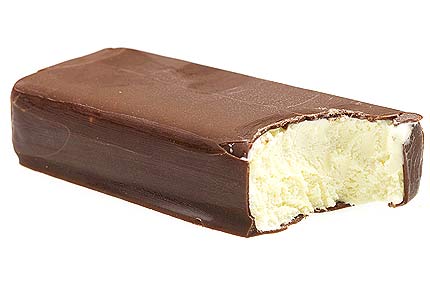
DEREK WILTON: And that is the genius of a choc ice. We have something very brittle surrounding some liquid, like one of those liqueur chocolates you have at Christmas. It is therefore impossible for a person with teeth to stand and eat a choc ice without chocolate going all over the floor.

[Archive footage of a man wearing flares eating a choc ice in a laboratory. Scientists are measuring the amount of chocolate around his feet.]

DEREK WILTON (cont.): And what happens to chocolate when heat is applied? Have you ever tried to get a Jaffa Cake out of the cellophane when it’s sunny outside? You look like you’ve been mud wrestling. Even if the chocolate is not that warm, it melts as soon as you touch it to pick it up off the carpet. Hail me, for I am a carpet cleaner-selling genius. [Maniacal laughter]

[Kerry walking along a Zurich street.]

KERRY McKERRY: So that is why we buy choc ices. Because we are total idiots. Now back to whichever white middle-aged man they hired to do the easy bit in the studio, weeks after I schlepped all around the world with a stinking film crew.

AVUNCULAR PRESENTER: Thanks, Kerry. That’s all we’ve got time for this week, apart from this bit I am now saying. Next week on Things We Buy Even Though We Know They’re Going To Go Wrong we’ll be taking a look at the Conservative Party. Goodnight!